This article may contain affiliate links, which means we may earn a small commission if you make a purchase — at no extra cost to you. We only recommend products we use and love, or tours we’ve personally experienced.
If you’ve been researching your trip to Turkey, you’ve probably heard at least one VPN sponsorship pitch.
So let’s answer the question clearly and honestly:
Do you actually need a VPN for your trip to Turkey?
Short answer: No — not everyone does.
But depending on how you travel, a VPN could either be completely unnecessary… or surprisingly valuable.
Here’s our real-world experience after traveling full-time and living abroad for years.
Our Experience With VPNs
We traveled internationally for nearly two years before ever using a VPN.
For the past three years, however, we’ve used one every single day.

Let’s break down the most common reasons people recommend VPNs — and whether they actually matter for your trip to Turkey.
1. Can a VPN Help You Find Cheaper Flights?
You may have heard that using a VPN allows you to change your virtual location and unlock cheaper flight prices.
In theory, airlines and booking platforms may display different prices depending on where you’re searching from.
In practice?
I’m not going to say it’s not possible, but we’ve tested this dozens of times and almost never saw a meaningful difference.
The only time we saw a noticeable price change was when booking hotels in India — prices were lower when browsing from outside of India — versus within (oddly enough).
For flights to Turkey specifically, we would not rely on a VPN as a money-saving strategy.
Verdict: Not a strong reason to buy a VPN.
2. Internet Restrictions in Turkey
This is where a VPN can become genuinely useful.
Turkey’s internet is generally open, but certain websites and platforms are occasionally restricted.
For example:
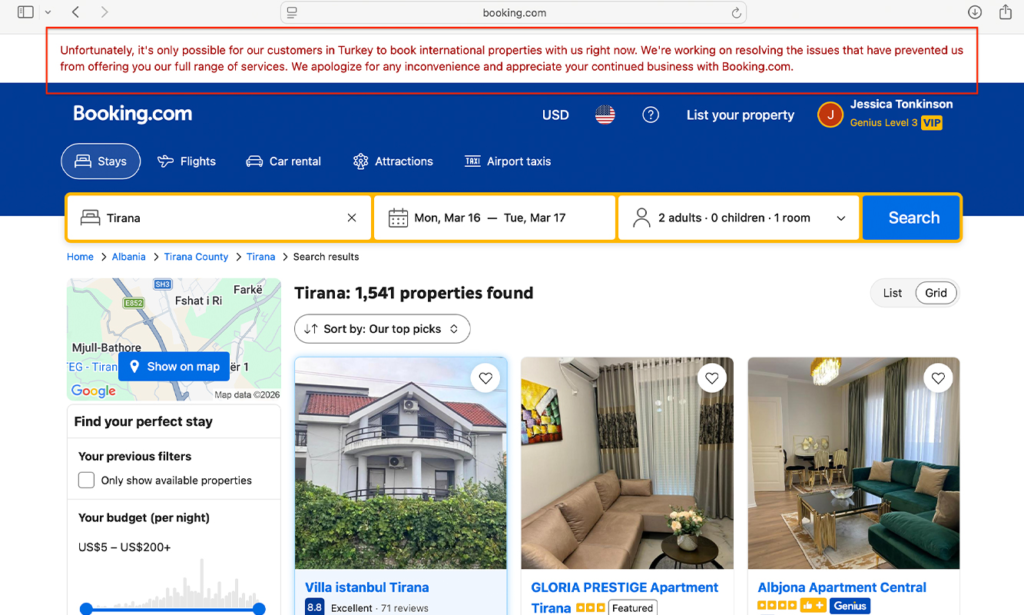
- You cannot process transactions on Booking.com while physically inside Turkey due to an ongoing tax dispute.
- Social media platforms like Instagram and Facebook have been temporarily blocked in the past.
- Some eSIM provider websites may be inaccessible.
We personally ran into this when trying to add data to an Airalo eSIM while inside Turkey. The website was blocked — but we were able to access it instantly using our VPN.
If you rely on specific booking platforms or apps, this flexibility can be helpful.
Verdict: Potentially useful, depending on how you book accommodations and manage services.
Planning a trip to Istanbul? Start here
We’ve created a complete set of free downloadable travel guides to help you plan your trip with confidence.
3. Streaming Your Favorite Shows
If you like unwinding with Netflix or other streaming platforms, this is where VPNs shine.
Streaming libraries vary by country.
With a VPN, you can access content from different regions — meaning you aren’t limited to what’s available locally.
Since we travel full-time, our laptops double as our TVs. Having access to global streaming libraries has been surprisingly valuable for us.

Is this essential for your trip? No.
Is it a nice bonus? Definitely.
Verdict: Convenience feature, not necessity.
4. Security on Public WiFi
This is the biggest reason we personally use a VPN.
When traveling, you’ll likely connect to:
- Airport WiFi
- Hotel networks
- Airbnb internet
- Cafe hotspots
Public networks are rarely fully secure.

We would not log into a bank account or access sensitive information on public WiFi without a VPN.
Before we left our corporate jobs, VPN usage was mandatory when accessing company systems remotely. Now we apply that same logic to our personal data.
For us, this alone makes it worth it.
Verdict: Strong reason to consider one — especially if you work remotely or handle sensitive accounts while traveling.
So… Do You Need a VPN in Turkey?
You probably don’t need one if you:
- Rarely use public WiFi
- Don’t stream content
- Don’t rely on Booking.com while in-country
- Avoid logging into sensitive accounts abroad
You may want one if you:
- Work remotely
- Use public WiFi frequently
- Book accommodations on the go
- Value added online privacy and security
- Want unrestricted access to streaming platforms
It ultimately comes down to how you travel.
The VPN We Use
We personally use Surfshark and have for several years.
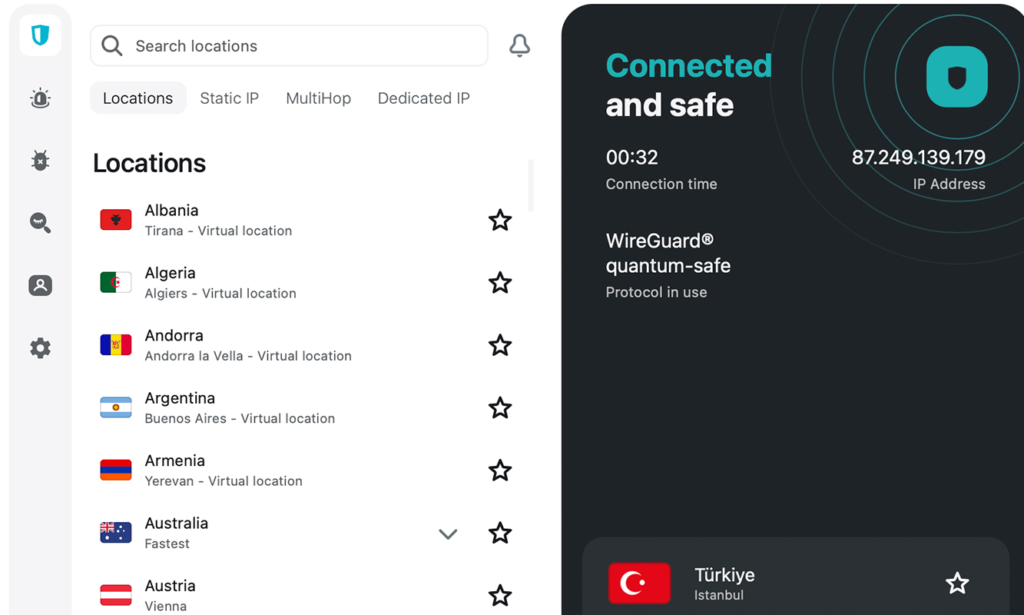
It’s simple to use, works across multiple devices, and has been reliable for us while traveling internationally.
If you decide a VPN makes sense for your trip, you can check out Surfshark.
No pressure — just an honest breakdown of when it helps and when it doesn’t.
Final Thoughts
A VPN isn’t mandatory for visiting Turkey.
But for some travelers, it adds convenience, flexibility, and peace of mind — especially when using public WiFi or accessing region-restricted services.
The goal isn’t to buy tools you don’t need — it’s to understand your travel style and choose what actually adds value.
If you know you’ll be relying on public networks or accessing important accounts while abroad, a VPN can be a simple way to add an extra layer of security.
If not, you’ll likely be just fine without one.
Planning a trip to Istanbul? Start here
We’ve created a complete set of free downloadable travel guides to help you plan your trip with confidence.
Inside, you’ll get:
- Detailed Istanbul guide (neighborhoods, food, logistics)
- Cappadocia & Turquoise Coast travel guides
- Ready-to-use Istanbul & Turkey itineraries (3 days to 3 weeks)
- Transportation tips
- Our personal recommendations & travel advice