This article may contain affiliate links, which means we may earn a small commission if you make a purchase — at no extra cost to you. We only recommend products we use and love, or tours we’ve personally experienced.
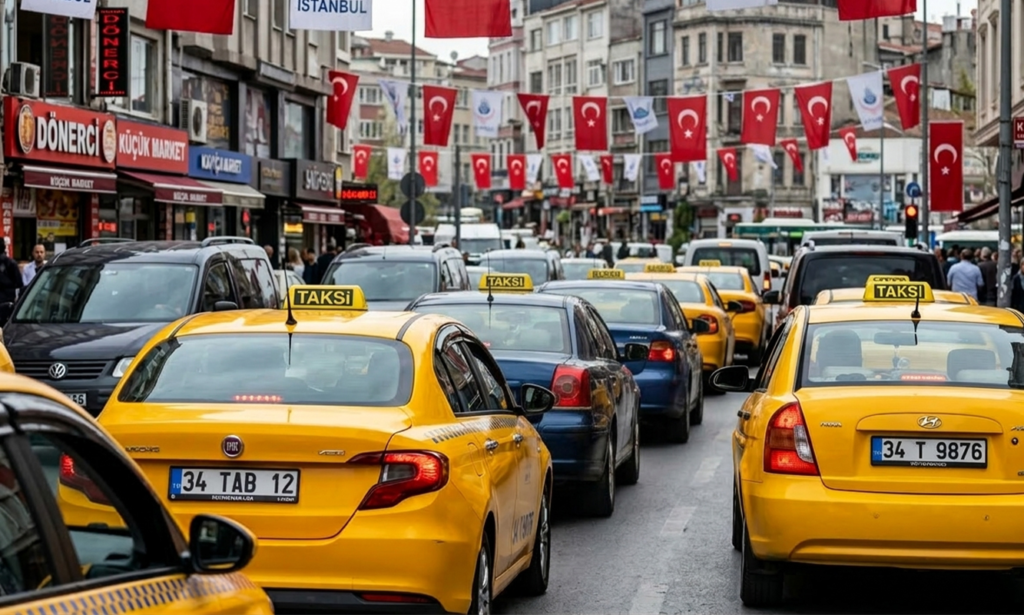
Yes, there are taxis in Istanbul, and in theory, taking one is an option for getting around the city.
That said — we personally avoid taxis whenever possible, and it’s our recommendation that you do the same.
This isn’t because taxis are always terrible or that you should never use one. It’s simply that in Istanbul, taxis are often the least efficient, most frustrating, and riskiest way to get around — especially when compared to the city’s excellent public transportation system.
Let’s explain why.
Istanbul Traffic Is the Biggest Problem
Frankly, traffic in Istanbul can be a nightmare.
The city is massive, densely populated, and built around water, bridges, and historic neighborhoods that were never designed for modern car traffic. During busy hours, traffic can slow to a crawl — and taxis are stuck in it just like everyone else.
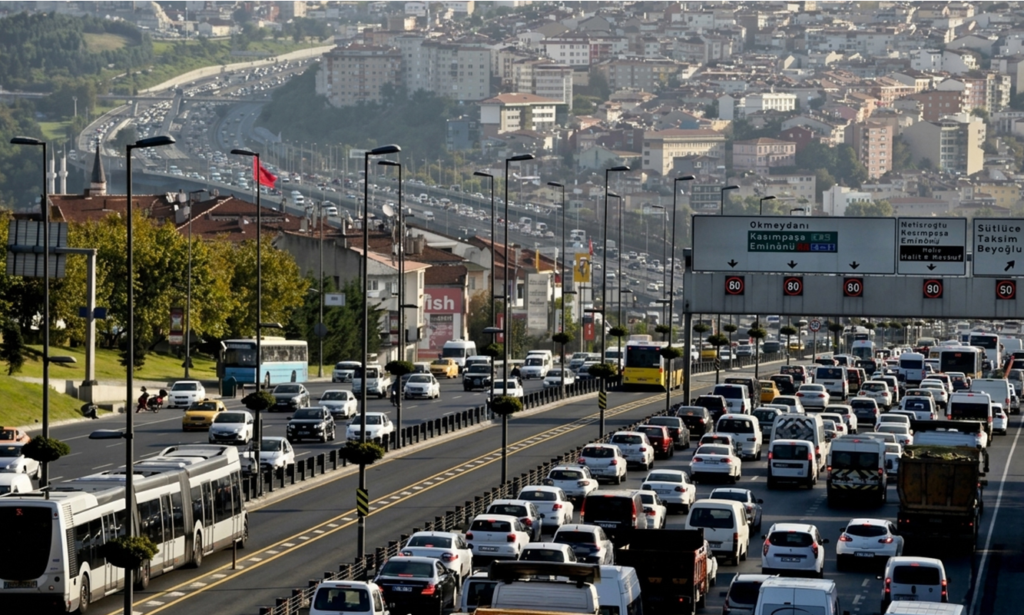
The key point is this:
A taxi typically does not get you anywhere faster than public transit. In fact, most of the time it’s the opposite.
Trams, metros, and the Marmaray all operate on their own dedicated routes. They bypass traffic and usually get you to your destination faster and more predictably than a taxi ever could.
Yes, public transit can get crowded — especially during rush hour — but it will still move. A taxi often won’t.
For a full overview of Istanbul’s public transportation options, check out our Istanbul public transportation article.
Taxis Can Be Surprisingly Hard to Get
Another thing that catches many travelers off guard is how difficult it can be to actually get a taxi.
Depending on where you are in the city and where you’re trying to go:
- Drivers may refuse short rides
- Drivers may refuse to go to certain areas
- You may wait a long time for someone to stop

This is especially common in busy, tourist-heavy areas or during peak times.
We’ve had plenty of moments where getting a taxi simply wasn’t possible — while public transit was readily available just a few minutes away.
Taxi Scams Are Common (Istanbul Is No Exception)
Taxis are one of the most common ways travelers get scammed anywhere in the world, and Istanbul is no exception.
While many drivers are honest, it only takes one bad experience to turn a simple ride into a stressful situation.
Some of the most common issues travelers encounter include:
- Drivers refusing to use the meter
- Drivers claiming the price is higher after you arrive
- Taking unnecessarily long routes
- Quoting inflated flat rates
- Swapping bills or disputing payment
These situations are frustrating at best — especially if you don’t speak Turkish.
This is one of the main reasons we recommend avoiding taxis whenever you can.
If You Do Need a Taxi, Use Uber (With Caution)
If you find yourself in a situation where you really need a taxi, we strongly recommend using Uber and paying with a credit card.
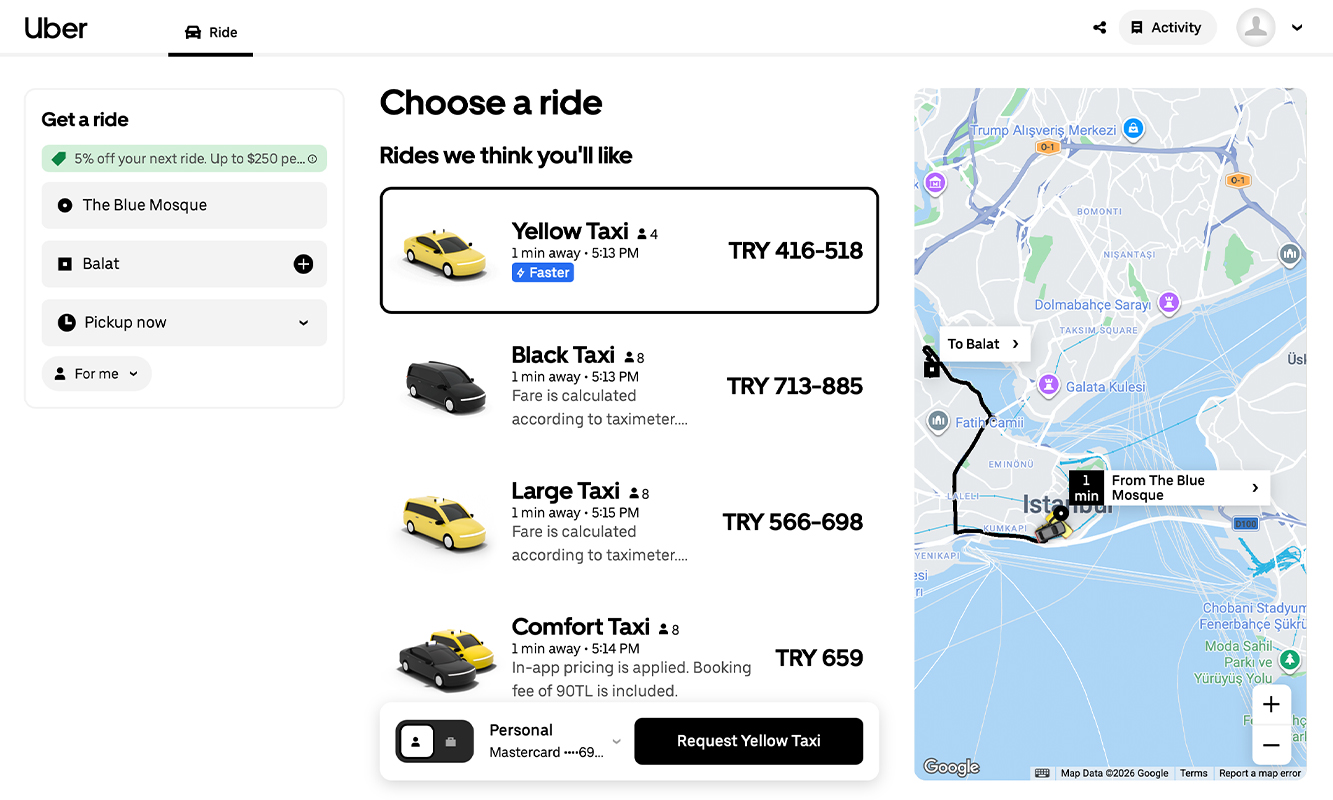
A few important things to know about Uber in Istanbul:
- Uber does not send private cars — it simply calls a regular taxi
- You’ll see a price estimate in the app before requesting the ride
- Payment can be made through the app, which adds an extra layer of protection
This alone helps eliminate many of the most common taxi scams.
However, Uber is not perfect here — and there are still a few things to be aware of based on our own experiences.
Planning a trip to Istanbul? Start here
We’ve created a complete set of free downloadable travel guides to help you plan your trip with confidence.
Uber Isn’t Foolproof (Our Real Experiences)
Even when using Uber in Istanbul, you may run into issues.
For example:
- If the ride is short, drivers often won’t accept it
- In busy or touristy areas, it can take a long time to get a match
- We’ve had rides accepted, only for the driver to arrive and say the price would be 2–3x higher than what was shown in the app
In those cases, we simply decline and try again — but it’s frustrating and time-consuming.
There’s also one very important thing to know once you’re actually in the taxi:
Even when you book through Uber, the meter should be running inside the taxi. At the end of the ride the driver must manually enter the final fare into the Uber app.
We’ve had more than one driver enter a higher amount after we exited the vehicle.
Because of this, we now:
- Stay in the car
- Watch them enter the fare
- Then get out
Uber does charge a separate booking fee, so the app total will be slightly higher than the meter — but this should appear as a separate line item, not rolled into the fare itself.
When Does a Taxi Actually Make Sense?
There are situations where taking a taxi can make sense.
For example:
- Traveling to or from the airport with luggage
- Very late at night when public transit has stopped
- Traveling with mobility issues
Outside of cases like these, taxis are rarely the best option.
See our Istanbul airport transfer article for step-by-step transit options to and from IST or SAW airports.

Final Thoughts
Unless you’re traveling a considerable distance — like to or from the airport — public transportation is almost always the better choice in Istanbul.
It’s cheaper, faster most of the time, more predictable, and far less stressful than taxis.
With Istanbul’s extensive metro, tram, and ferry network, you can move around efficiently and avoid the headaches of traffic and common taxi scams.
Don’t forget to check out our full article on getting around Istanbul using public transit so you can navigate Istanbul like a pro from day 1.
Planning a trip to Istanbul? Start here
We’ve created a complete set of free downloadable travel guides to help you plan your trip with confidence.
Inside, you’ll get:
- Detailed Istanbul guide (neighborhoods, food, logistics)
- Cappadocia & Turquoise Coast travel guides
- Ready-to-use Istanbul & Turkey itineraries (3 days to 3 weeks)
- Transportation tips
- Our personal recommendations & travel advice