This article may contain affiliate links, which means we may earn a small commission if you make a purchase — at no extra cost to you. We only recommend products we use and love, or tours we’ve personally experienced.
Istanbul is a huge city that stretches across two continents and is divided by waterways like the Bosphorus and the Golden Horn. At first glance, getting around might seem intimidating.
The good news is that Istanbul actually has a very good public transportation system, and once you understand how it works, it’s surprisingly easy to navigate the city.
So we’re going to cover everything you need to know, including:
- Metro, trams, and trains
- Ferries across the Bosphorus
- Buses
- Taxis and rideshare apps
- When renting a car does (and doesn’t) make sense
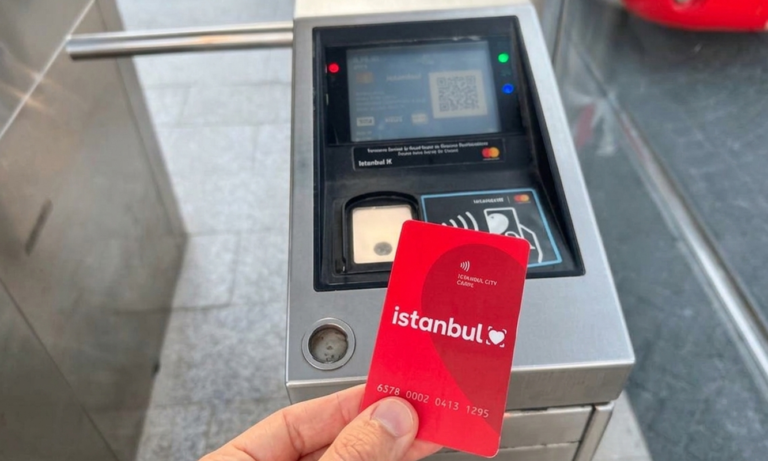
If you’re planning to use public transportation frequently, you’ll also want to make sure you get an Istanbulkart, which is the main transit card used throughout the city.
Check out our detailed article explaining the Istanbulkart — how it works, where to buy it, and whether you actually need one.
The Metro & Marmaray Train
The metro system is one of the fastest ways to get around Istanbul.
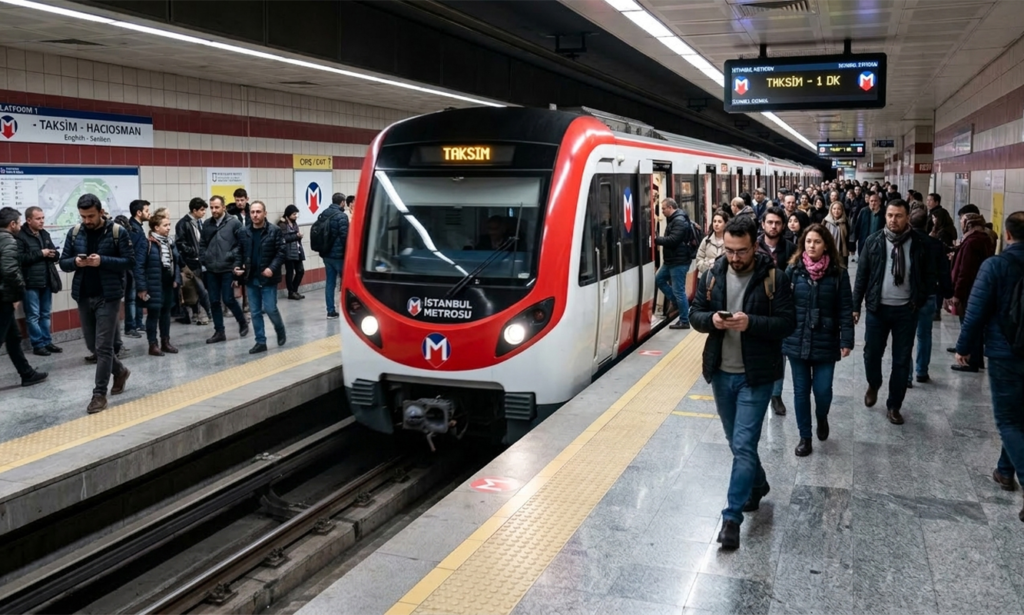
While the metro doesn’t cover every neighborhood in the city, it connects many major districts and makes it easy to travel longer distances.
The Marmaray line is particularly useful because it runs under the Bosphorus, connecting the European and Asian sides of the city.
Both the metro and the Marmaray operate on fully separated rail lines, which means they do not have to deal with road traffic at all. Because of this, they are often the fastest and most reliable way to travel across the city, especially during busy hours when Istanbul’s streets can become heavily congested.
The metro system is modern, clean, and relatively easy to navigate — And all of the stations also have easy-to-read maps.
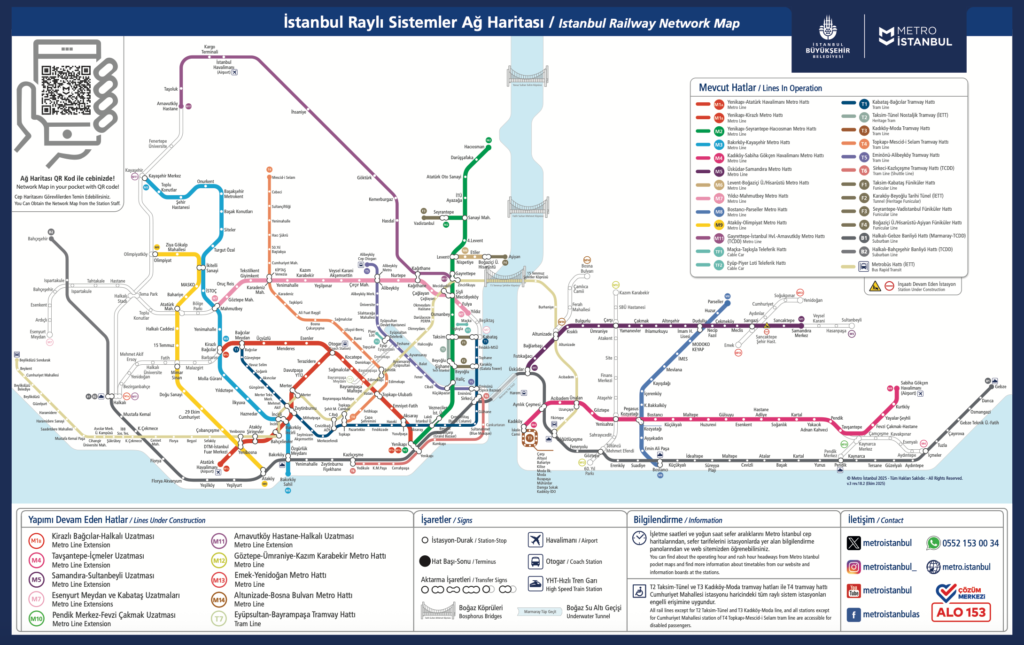
The simplest way to plan your route is by using Google Maps with the transit layer turned on, which provides very accurate directions and travel times.
Learn our top tips on how to use Google Maps for public transit in Istanbul.
Planning a trip to Istanbul? Start here
We’ve created a complete set of free downloadable travel guides to help you plan your trip with confidence.
Trams
The tram system works similarly to the metro but typically covers shorter distances.
One of the most useful tram lines for visitors is the T1 tram, which runs through many major tourist areas including:
- Sultanahmet
- Eminönü
- Karaköy
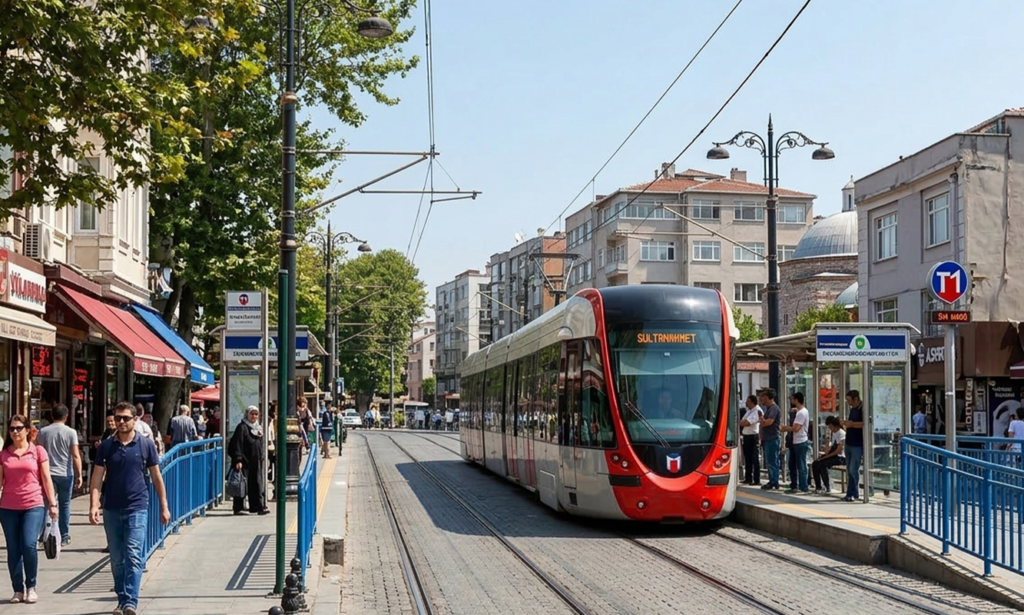
Because it connects many of the main historic sites, this tram line is one that most travelers will end up using at least once during their trip.
Like the metro, you simply tap your transit card at the entrance gate before boarding.
Ferries: The Best Way to Cross the Bosphorus
Taking the ferry across the Bosphorus is one of the most enjoyable ways to travel in Istanbul.
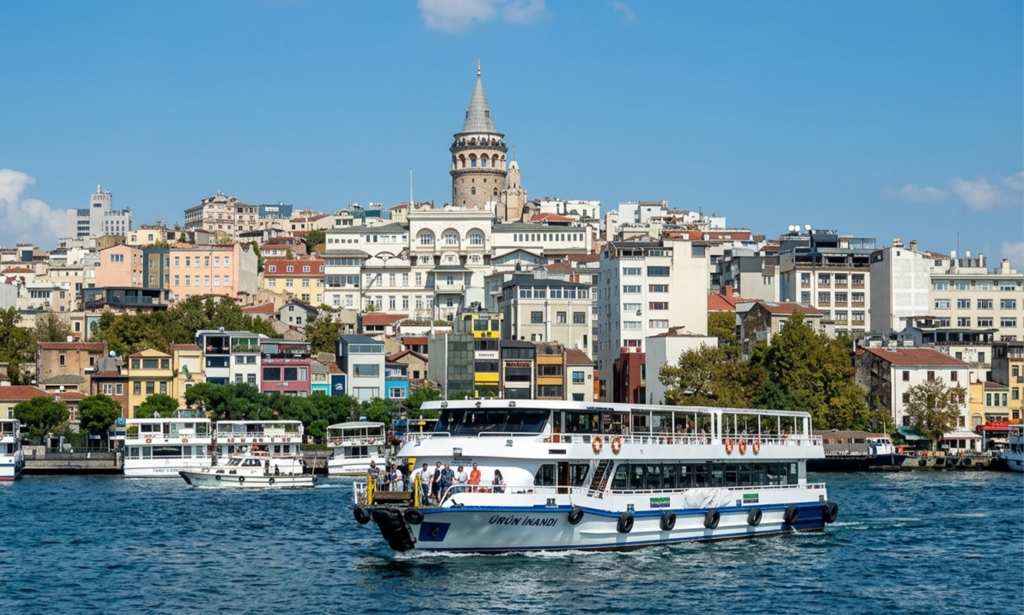
It’s not only practical — the views of the city skyline, mosques, and waterfront neighborhoods make this one of the most scenic ways to get around.
The ferry system connects many neighborhoods along the Bosphorus and makes it easy to move between the European and Asian sides.
There are several ferry companies and routes operating across the water. The main ferry ports include:
- Eminönü
- Karaköy
- Kadıköy
- Beşiktaş

Most ferry docks clearly list the destination before you tap your Istanbulkart, but if you’re unsure you can always ask someone before boarding.
Two Major Ferry Operators
You can check schedules for the two main ferry companies:
Buses
Istanbul has an extensive bus network that reaches almost every part of the city, including neighborhoods that aren’t served by the metro or tram lines. Because of this, buses can be useful for filling in the gaps when rail transit isn’t available.
However, there is one major downside to buses in Istanbul: traffic.
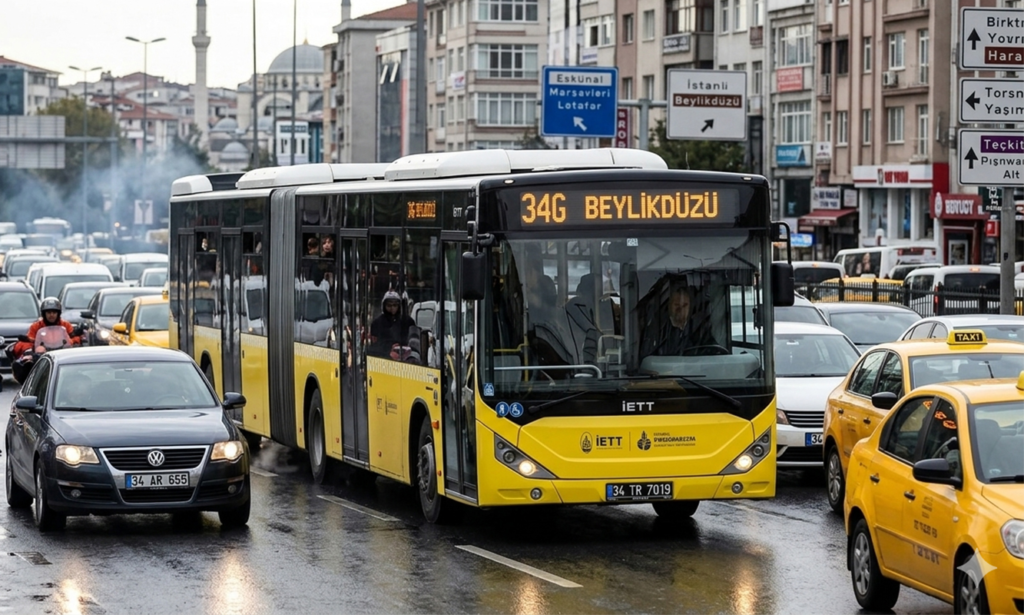
Unlike the metro, tram, or Marmaray train, buses operate on the same streets as regular vehicles, which means they are heavily affected by the city’s notoriously congested traffic.
By comparison, trams often run on dedicated tracks or lanes, and the metro and Marmaray operate on fully separate rail lines, so they don’t have to deal with road traffic at all. Because of this, if a metro or tram line is available for your route, it will almost always be the faster and more reliable option.
Another thing to keep in mind is that Google Maps’ estimated travel times for buses don’t always fully account for Istanbul’s unpredictable traffic. What looks like a 20-minute bus ride on the map can sometimes take significantly longer depending on the time of day and the route.
That said, buses can still be very helpful when there isn’t a nearby metro or tram line.
Because there are so many different bus routes, figuring out which one to take can feel a little confusing at first. Fortunately, a couple of tools make the system much easier to navigate.
Tips for Using the Bus
- Use Google Maps to plan your route. Simply enter your destination and the app will show which buses to take and where to get off.
- When boarding the bus, tap your Istanbulkart on the reader as you enter.
- Most buses have digital displays showing upcoming stops, making it easier to follow along during the ride.
- There is also an official public transportation app called Mobiett, which provides bus routes, schedules, and stop information.
Because of the traffic factor, we generally treat buses as a backup option, and prefer using the metro, trams, or ferries whenever possible.
Taxis and Rideshare Apps in Istanbul
You’ll see yellow taxis everywhere in Istanbul, and at first glance they might seem like the easiest way to get around.
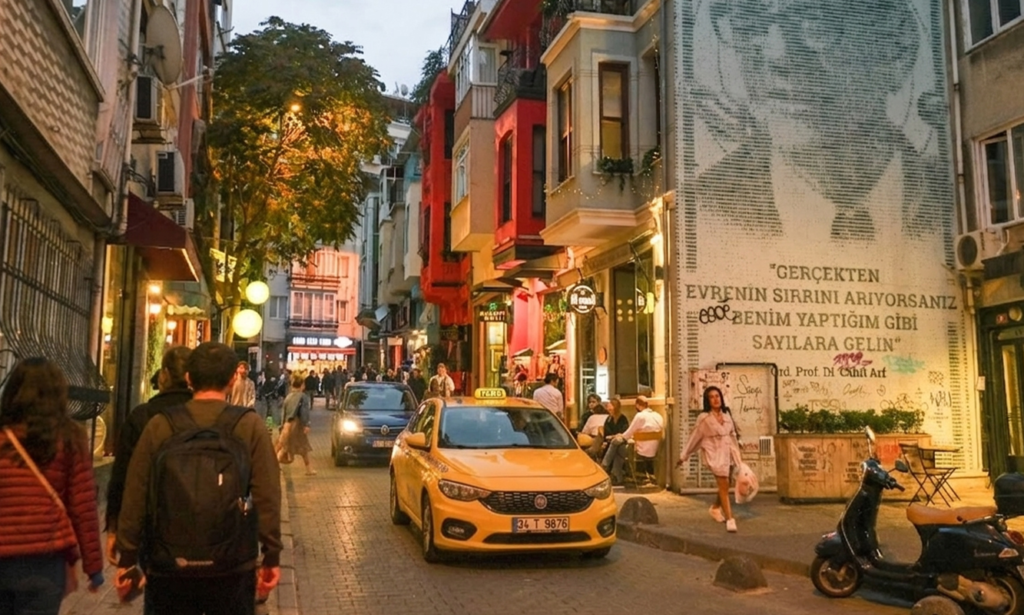
However, in practice, taxis are not always the most reliable option for short trips around the city.
Many drivers prefer longer rides, so it can sometimes take longer than expected to get a taxi to accept a short trip across town. Traffic can also be extremely heavy in certain parts of Istanbul, which means what looks like a quick ride on the map can easily turn into a much longer journey.
For that reason, we usually recommend using public transportation whenever possible. The metro, trams, ferries, and Marmaray train are often faster and more predictable.
You will also see rideshare apps like Uber available in Istanbul. However, it’s important to know that rideshare apps here do not operate with private drivers like they do in many other countries. Instead, apps such as Uber simply call a regular licensed taxi.
So whether you hail a taxi on the street or request one through a rideshare app, you’re typically getting the same taxi service.
Taxis can still be useful in certain situations, particularly for:
- Airport transfers
- Late-night rides when public transit is limited
- Longer trips across the city
That said, if you do take a taxi, we always recommend you book through a rideshare app.
Check out our detailed article explaining exactly how taxis work in Istanbul, common issues travelers run into, and how to avoid them.
Should You Rent a Car in Istanbul?
If you’re planning to explore other parts of Turkey, renting a car can be a fantastic option.
We actually did a five-week road trip across Turkey, and the roads were in excellent condition almost everywhere.
However, we do not recommend renting a car while staying in Istanbul.
Traffic is intense, parking is difficult, and public transportation is far easier.
If you plan to rent a car, it’s usually best to wait until you’re leaving the city.

Final Thoughts
Navigating Istanbul’s public transportation might feel daunting at first, but once you understand the system, it’s surprisingly straightforward.
For most visitors, the best approach is simple:
- Buy an Istanbulkart
- Use metro and trams for longer distances
- Take the ferry when crossing the Bosphorus
- Use Google Maps to plan your routes
Once you get the hang of it, navigating Istanbul becomes surprisingly easy — and sometimes even part of the adventure.
Planning a trip to Istanbul? Start here
We’ve created a complete set of free downloadable travel guides to help you plan your trip with confidence.
Inside, you’ll get:
- Detailed Istanbul guide (neighborhoods, food, logistics)
- Cappadocia & Turquoise Coast travel guides
- Ready-to-use Istanbul & Turkey itineraries (3 days to 3 weeks)
- Transportation tips
- Our personal recommendations & travel advice